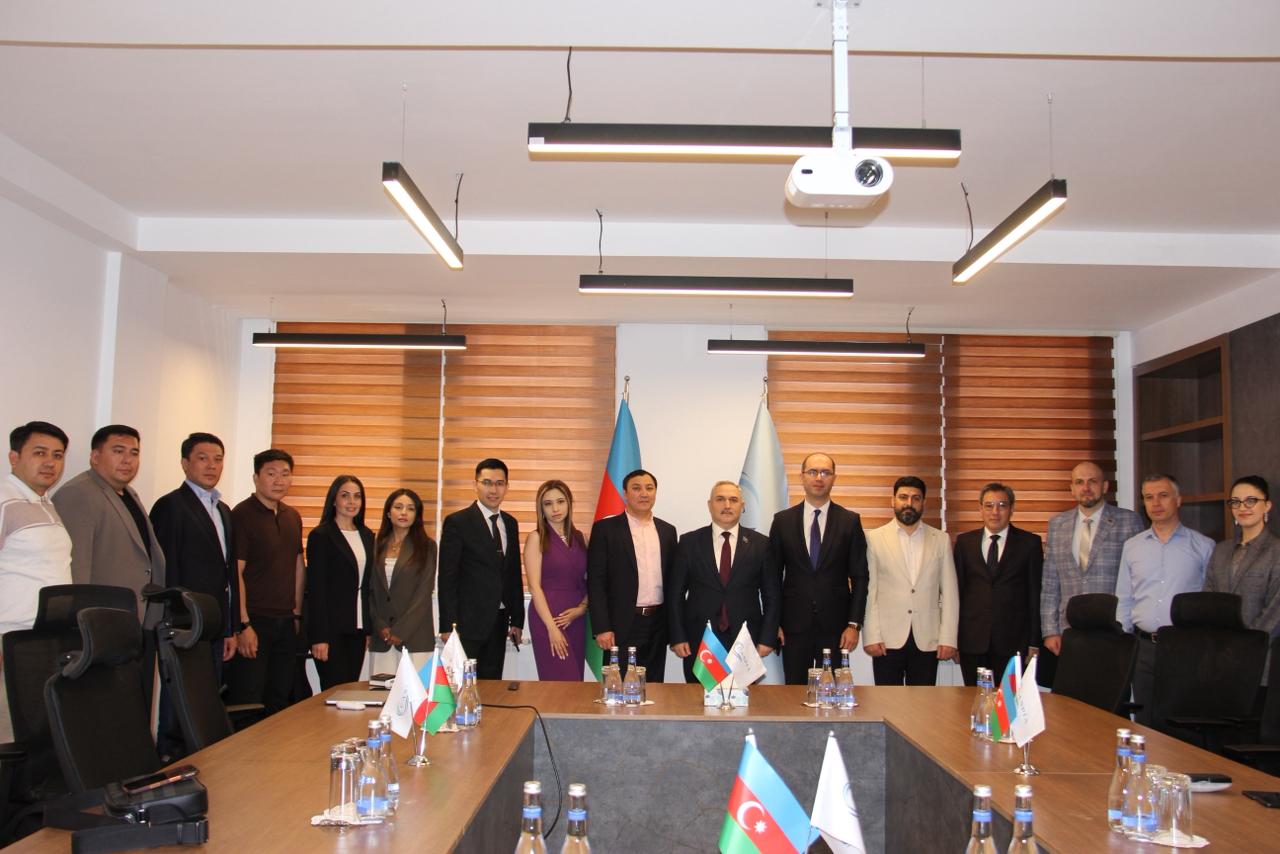
A roundtable discussion on the development prospects of the Middle Corridor (Trans-Caspian International Transport Route, TITR) was held in Baku, bringing together policymakers, analysts, and logistics industry representatives from Central Asia.
The event was attended by Member of Parliament Azer Allahveranov, as well as experts and senior representatives of leading logistics companies, including Transexpediction, BBM Logistics, Greenline, and TransConsulting LLP, among others.
The discussion contributed to the development of practical solutions and analytical approaches aimed at strengthening the Middle Corridor. In the long term, these efforts are expected to enhance its competitiveness and reinforce the region’s role in the global system of trade and transport connectivity.
Amid growing geopolitical uncertainty and the ongoing transformation of global trade routes, the resilience and security of logistics chains have become increasingly important. In this context, the South Caucasus and Central Asia are gradually emerging as key regions providing alternative connectivity between Europe and Asia.
According to Orkhan Yolchuyev, Director of the CASPIA Analytical Center, the Middle Corridor is no longer merely an alternative route but a strategically significant direction capable of mitigating risks associated with traditional transport corridors.
MP Azer Allahveranov noted that the Middle Corridor has already moved beyond a purely regional framework and is increasingly integrating the South Caucasus and Central Asian countries into a unified transport and logistics system.
During the discussion, participants emphasized that despite existing risks, logistics companies are actively working to mitigate them. In particular, the need for interdisciplinary approaches to logistics management was highlighted.
Human capital development was also identified as a key priority. Participants pointed to Kazakhstan’s experience, where integration between logistics companies and universities is actively developing, helping to create a new generation of practice-oriented professionals. Strengthening human resources was seen as essential for ensuring the corridor’s long-term sustainability.
The importance of continued dialogue among experts and practitioners was also stressed. Regular engagement allows stakeholders to address bottlenecks, including congestion, infrastructure constraints, and operational challenges, while sharing practical solutions and best practices.
Among the challenges discussed, particular attention was given to the declining water levels in the Caspian Sea, which negatively affect maritime transport conditions and efficiency. Participants noted the need for technical and infrastructural measures to mitigate the impact of this issue.
The roundtable concluded with an exchange of views on potential solutions and policy recommendations for the further development of the Middle Corridor. Participants agreed on the importance of maintaining this format of dialogue as a platform for coordination between government institutions, the expert community, and the private sector.