
The negotiations between Azerbaijan, Georgia, Türkiye and Bulgaria on the creation of a new overland electricity transmission corridor reflect a broader transformation of the South Caucasus’ role in the energy sector. While in previous decades the region was connected to Europe primarily through oil and gas exports, a new model is now taking shape: the export of electricity, particularly electricity generated from renewable energy sources.
The initiative did not emerge in a vacuum. Azerbaijan is already developing major wind and solar energy projects and views the export of “green” electricity as a new direction in its energy strategy. At the same time, the countries of Central Asia and Azerbaijan are discussing electricity transmission projects across the Caspian. As a result, the new route through Georgia, Türkiye and Bulgaria could become part of a much larger chain: Central Asia — the Caspian — Azerbaijan — Georgia — Türkiye — Europe.
For Azerbaijan, the project is important primarily as a new export route. Baku seeks to preserve its role as a key energy partner for Europe while expanding its exports beyond oil and gas. At the same time, the country’s growing renewable generation capacity requires access to external markets. This is why the development of green electricity generation and the construction of export infrastructure have become interconnected tasks: without new transmission lines, further expansion of generation will be constrained by domestic demand.
Georgia represents the next link in the chain. According to Inga Pkhaladze, Deputy Minister of Economy and Sustainable Development, the country hopes not only to transit electricity but also to export its own power. However, Georgia’s potential is constrained by the seasonality of its energy system: hydropower accounts for the bulk of electricity generation, making export volumes dependent on water availability and seasonal conditions. For Tbilisi, therefore, the new corridor is important both as a transit project and as an opportunity to integrate its own energy system into a broader regional market.
Türkiye occupies a central position in the entire route. It is the country expected to connect the South Caucasus with the European energy system. Turkish Minister of Energy Alparslan Bayraktar has already compared the initiative to an “electric TANAP.” The comparison is significant: just as TANAP became a key component of the Southern Gas Corridor, the new infrastructure could turn Türkiye into a major hub for electricity transit between the Caucasus and Europe.
Yet the main practical challenge of the project also lies along the Turkish route. The future corridor will require a substantial increase in transmission capacity along the Azerbaijan–Georgia–Türkiye–Bulgaria route. A political agreement alone does not mean that existing networks are capable of transmitting the required volumes. The results of the feasibility study will therefore be decisive: they must determine which transmission lines need to be built or upgraded, how much this will cost, and who will finance the infrastructure.
The inclusion of Bulgaria gives the project particular significance, as the country could serve as a potential gateway to the European Union market. For Sofia, the new route offers an opportunity to strengthen Bulgaria’s role in the energy system of Southeastern Europe, while for Azerbaijan and its partners, it provides another path to European consumers.
At the same time, the project’s prospects should be assessed with caution. Unlike natural gas, electricity exports depend not only on the availability of infrastructure but also on market prices at a particular moment. For future investments to be economically viable, competitive electricity prices, guaranteed generation volumes and sustained demand in Europe will all be required. The project’s commercial model will therefore be one of its key challenges.
The new overland corridor should also not be viewed as an alternative to the Black Sea submarine cable connecting Azerbaijan with Europe. On the contrary, the two projects could complement one another. The more routes the region has for exporting electricity, the greater its energy resilience and negotiating leverage.
Thus, the negotiations among the four countries represent an attempt to apply the already proven model of the Southern Gas Corridor to the electricity sector. Azerbaijan could become both a supplier and a transit hub; Georgia, a key bridge and exporter of its own electricity; Türkiye, a central energy hub; and Bulgaria, a gateway to the European market.
The key question now is whether the project will remain a political initiative or be backed by concrete investment and infrastructure. If the parties can address the issue of grid capacity and create a commercially viable model, the new corridor could become part of a much larger energy system connecting the Caspian region and Central Asia with Europe. This is precisely what makes the project important: it is not merely about building another power transmission line, but about the possible emergence of a new energy axis for the region.
Turkish diplomat and Chairman of the London Energy Club Mehmet Öğütçü believes that the proposed energy corridor should be viewed in a much broader context than simply as an electricity transmission project. In his assessment, the current initiative could become the foundation for an integrated corridor that would eventually bring together not only energy, but also transport, logistics, digital infrastructure, food supply chains and investment flows.
According to the expert, the region already has experience in creating such cross-border systems. The implementation of the Baku–Tbilisi–Ceyhan pipeline, the South Caucasus Pipeline and TANAP has shown that infrastructure projects initially regarded as geopolitically attractive but commercially challenging can, over time, transform the economic and energy landscape of an entire region. The next stage, Öğütçü believes, could be the integration of existing and new infrastructure into a single system.
At the same time, Öğütçü stresses that the key change must concern how the roles of Azerbaijan, Georgia and Türkiye are perceived. In his view, none of these countries should be limited to the function of a transit territory. Transit generates revenue from the movement of goods and energy, whereas becoming a hub creates additional value through logistics, processing, trade, financial services and digital infrastructure.
Within this distribution of roles, Azerbaijan, according to the expert, could strengthen its position as the gateway to the Caspian, connecting Central Asia with the Caucasus and Europe while expanding its role in energy, logistics, processing and digital services. Georgia could enhance its importance as a multimodal hub linking the Caspian, the Black Sea, Türkiye and Europe, combining goods transit with electricity generation and trade. Türkiye, with its larger economy, industrial base, financial market and connections to several regions, could provide the scale required for such a system.
As a long-term objective, Öğütçü proposes developing a unified strategy for integrated corridors and hubs by 2035. Such a strategy would combine energy, railways and highways, ports, logistics, power grids, storage facilities, digital infrastructure, food supply chains, customs digitalisation and financing mechanisms. At the same time, he stresses that creating the right political conditions will not be sufficient. The implementation of such a model will require the involvement of private businesses, sovereign funds, international financial institutions and major energy, logistics and technology companies.
Thus, in the Turkish expert’s assessment, the current negotiations on an electricity corridor could become only the first element of a much broader architecture. In the longer term, the objective is not simply to connect Central Asia and Europe through new routes, but to create a space in which energy, goods, data, food and capital move through interconnected infrastructure. According to Öğütçü, the ability to transform transit routes into centres of value creation, rather than merely channels through which goods and energy pass, will determine the region’s economic significance over the next decade.
.jpeg)
According to Azerbaijani energy expert, Director of the Center for Oil Research in Azerbaijan Ilham Shaban, the proposed energy corridor between Azerbaijan, Georgia, Türkiye and Bulgaria has already moved beyond the stage of an ordinary political declaration. At the same time, it is still premature to speak of its immediate implementation: the project remains at the stage of establishing its technical, economic and legal foundations.
The expert notes that the idea began to take shape as early as November 2024 at an energy forum in Istanbul, where the four countries agreed to create new interconnection facilities. The first official document, a Memorandum of Understanding, was signed in Baku on 4 April 2025. The energy ministers of the four countries subsequently continued to coordinate work on the project through regular meetings.
An important milestone was the third ministerial meeting in Istanbul in May 2026. According to Shaban, the parties agreed on a document formalising the technical mandate for further work. In June, Bulgaria announced the imminent launch of a preliminary feasibility study. At the same time, the participants agreed to begin preparing an intergovernmental agreement among the four countries and a detailed roadmap.
This sequence of developments, the expert believes, indicates that the initiative is moving from political discussion to a practical stage of preparation. The project has not yet reached the construction phase, but it is already establishing the technical and legal mechanisms without which the implementation of transnational energy infrastructure would be impossible. Shaban considers the project entirely realistic and identifies three main factors that could increase the prospects for its implementation.
The first is Azerbaijan’s export potential. In his view, the country is no longer dealing merely with declarative plans for developing green energy, but with the formation of a concrete portfolio of wind and solar projects. As a result, Azerbaijan could eventually gain the capacity to export not just isolated volumes of electricity, but a new energy resource measured in several gigawatts.
The second factor, according to the expert, is Türkiye’s capacity. The country’s electricity system is already interconnected with the energy systems of Azerbaijan, Georgia and Bulgaria. The central task of the new project, therefore, is not to create an entirely new energy space, but to establish a reliable infrastructure system capable of significantly increasing electricity flows from Azerbaijan through Georgia and Türkiye to Bulgaria.
The third factor is related to Georgia’s interests. The country, where hydropower plays a major role in the structure of electricity generation, is interested not only in transiting Azerbaijani electricity. As Shaban notes, Tbilisi also seeks to gain the opportunity to export its own green electricity to the European market, including in the direction of Bulgaria.
It is precisely this combination of interests that, in the expert’s view, makes the project more commercially attractive. Azerbaijan gains an additional export route; Georgia has the opportunity to combine transit with exports of its own electricity; Türkiye strengthens its role as an energy bridge; and Bulgaria becomes the entry point for a new flow of energy to the European market.
Shaban also highlights an important advantage of the overland route. Its implementation could potentially require lower capital investment than the Black Sea Energy Project, which envisages the construction of a high-voltage submarine cable across the Black Sea. The new route would primarily involve the development and reinforcement of already interconnected energy systems, potentially making the project more flexible in terms of both cost and implementation timelines.
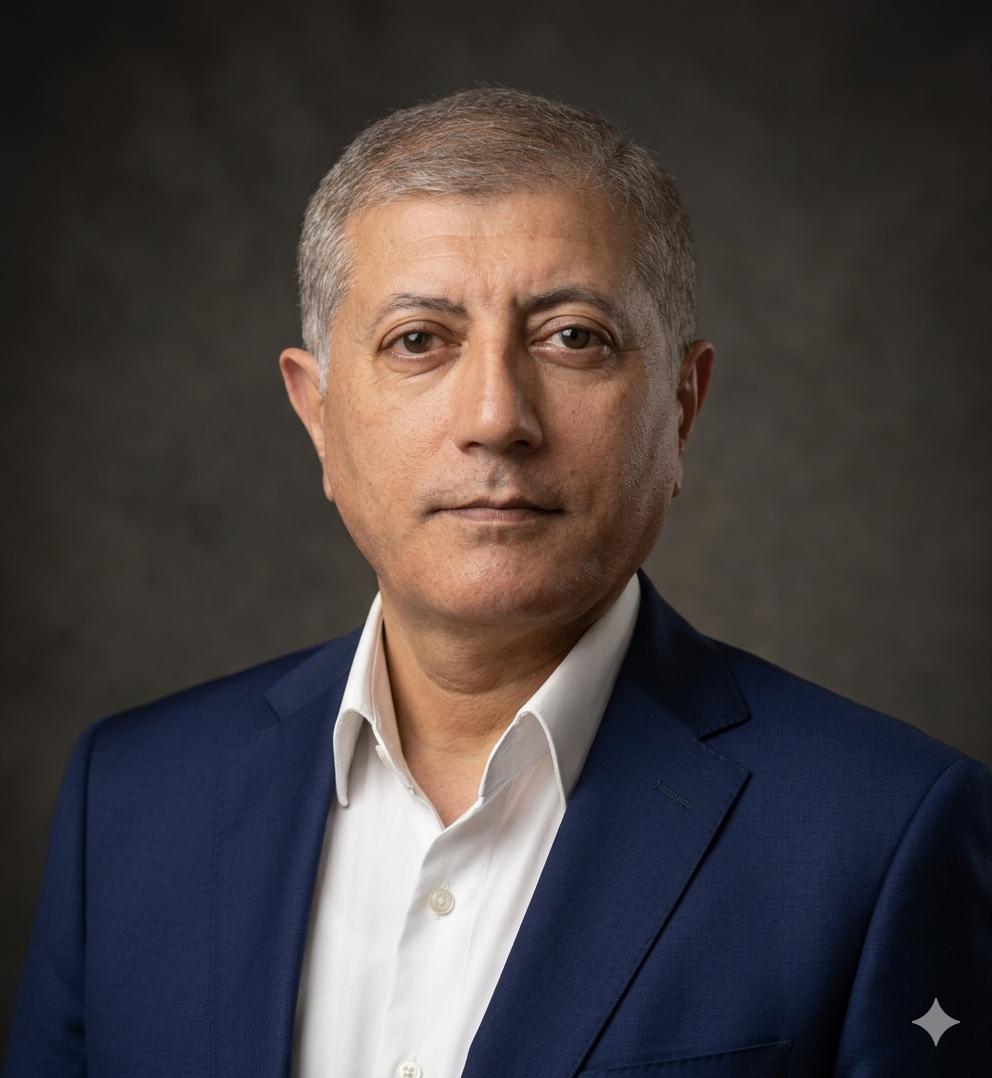
However, not all experts share this optimism regarding the technical feasibility of the overland route. Yavor Kuiumdjiev, former Deputy Minister of Economy and Energy of Bulgaria, engineer and energy expert, takes a more sceptical view of the project’s prospects. In his assessment, the central issue is not the political interest of the countries involved, but the technical limitations associated with transmitting electricity over long distances.
Kuiumdjiev points out that electricity transmitted through overland alternating-current lines cannot efficiently travel extremely long distances without significant technical losses and additional costs. Therefore, the Azerbaijan–Georgia–Türkiye–Europe route, as currently envisaged, faces serious physical and infrastructure-related constraints.
A second problem, he believes, is the need for deeper integration of the energy systems of Azerbaijan and Georgia with the pan-European ENTSO-E system. In his view, the large-scale transmission of significant volumes of electricity to the European market would require extensive technical adaptation and synchronisation of the power systems. The expert notes that Ukraine’s integration into the European energy system took many years, and similar work would require substantial resources and could not be completed within a short period.
At the same time, Kuiumdjiev does not argue that the project is entirely impossible. However, in his assessment, its implementation would require considerably more time and infrastructure transformation than current political rhetoric might suggest.
In this context, the expert points to the existing project for a submarine energy connection between Azerbaijan, Georgia, Romania and Bulgaria across the Black Sea. In his view, high-voltage direct-current transmission is a more suitable technology for transmitting electricity over long distances. This is why the submarine route could be technically more logical than an extensive overland system running through several countries.
Overall, the Bulgarian expert remains fairly sceptical of the new initiative and believes that, at this stage, its promotion is driven to a significant extent by political and public considerations. One reason for the growing attention to such projects, in his view, is Europe’s energy challenges, including droughts, falling water levels and difficulties affecting certain energy facilities. Under such conditions, European governments need to demonstrate that they are searching for new solutions to strengthen energy security.
Nevertheless, despite his critical assessment of the specific route, Kuiumdjiev sees considerable opportunities for energy cooperation between Azerbaijan and Bulgaria. In particular, he highlights Azerbaijan’s substantial potential in renewable energy and proposes making use of Bulgaria’s experience in energy storage.
According to the expert, Bulgaria has significantly accelerated the development of renewable energy sources and storage systems in recent years. He therefore sees a promising avenue for cooperation not only in the construction of new cross-border transmission lines, but also in the exchange of experience in energy storage, battery systems and the integration of renewable generation into the power system.
.jpeg)
Georgian economist Vakhtang Charaia views the potential energy corridor primarily through the prism of Georgia’s economic potential. In his assessment, the main advantage for Georgia could be the opportunity to harness a much larger share of its own energy resources. At present, according to Charaia, the country uses only part of its hydropower potential—approximately 15 to 20 percent of its total potential. Further development of solar and wind energy could significantly increase overall generation capacity.
This is why the creation of a new export route could be important for Tbilisi not only from the perspective of transiting electricity from other countries. In the long term, it could create an external market for Georgia’s expanding electricity generation. Without export opportunities, further growth in electricity production would face the limitations of domestic demand, whereas access to a broader regional and European market would increase the investment attractiveness of the energy sector.
Charaia believes that, if stable demand exists and European businesses show interest in the project, the development of Georgia’s energy sector could attract not only public but also private investment. Potential participants, in his view, could include major European investors as well as local businesses interested in developing new generating capacity.
In this scenario, the economic impact on Georgia could extend beyond transit revenues. The expert links the development of energy infrastructure with job creation, increased budget revenues and broader economic growth. Thus, the new corridor could become both an infrastructure and an investment project, providing an additional incentive to unlock the country’s own energy potential.
In the broader regional context, Charaia sees the initiative as potentially mutually beneficial for all participants. Azerbaijan would gain an additional direction for electricity exports; Georgia would have an opportunity to develop its own generation while simultaneously participating in transit; and Bulgaria would receive an additional energy flow and the associated economic benefits. For the European Union, in turn, the project could provide another source and route for the diversification of energy supplies.
At the same time, the Georgian expert’s assessment is based on one important condition: the project must be technically feasible and economically justified. It is these factors that will determine whether Georgia’s substantial energy potential, as assessed by Charaia, can be transformed from a resource into a genuine source of long-term investment and export revenues.

A more cautious but generally positive assessment of the initiative’s prospects is offered by Georgian energy expert Murman Margelashvili, Director of the Institute of Energy and Sustainable Development at Ilia State University and founder of the World Experience for Georgia (WEG) think tank, specialising in energy policy and energy security. In his view, it is still premature to draw final conclusions about the specific model of the future corridor, as publicly available technical and economic information about the project remains limited. The key question is which route option will ultimately be selected and how far the feasibility assessment has progressed.
Margelashvili notes that various options for a broader energy corridor have already been examined as part of a dedicated study conducted by the Italian company CESI. In particular, different routes connecting Azerbaijan with the European market were analysed, including directions via the Black Sea and Türkiye. For this reason, the expert believes that the current negotiations among the four countries should be viewed as part of a broader process aimed at identifying the optimal model for transmitting green energy from the region to Europe.
According to the expert, the European Union has in recent years been actively searching for new energy sources and alternative supply routes. Following the sharp reduction in Russian gas supplies, energy security and diversification have acquired particular importance for Europe. At the same time, the EU is seeking to accelerate its transition towards a low-carbon energy system.
It is precisely the combination of these two objectives—strengthening energy security and expanding renewable energy—that may explain Europe’s interest in such initiatives. Margelashvili believes that the EU and Bulgaria are likely to take a positive view of projects capable of delivering new supplies of green electricity. He also notes that interest in developing such routes already exists within Bulgaria’s energy leadership.
The substance of the project itself, in the expert’s assessment, is also consistent with the region’s energy potential. Azerbaijan has significant potential for the development of wind energy, Georgia can expand the contribution of hydropower, and, in a broader perspective, electricity from Central Asia could reach Azerbaijan across the Caspian. Thus, the project could potentially involve not a single national source, but the creation of an integrated regional flow of green energy.
If such a system is established, Azerbaijan, Georgia and Türkiye could move beyond the role of individual transit states and create a more integrated energy space. According to Margelashvili, this could increase the importance of the South Caucasus as one of the key energy centres at the intersection of the Caspian region and Europe.
At the same time, the implementation of such an initiative would require major infrastructure development. Power grids would need to be significantly expanded and modernised, the transmission of large volumes of energy would have to be ensured, and the challenge of balancing growing renewable generation would need to be addressed. The expert also does not rule out that hydrogen production could eventually be considered within such projects, allowing part of the additional renewable energy output to be utilised.
This is why Margelashvili describes the future project as a potentially large-scale and long-term initiative. In his assessment, its implementation will require extensive preparatory work, technical studies, coordination among all participating countries and the development of a sustainable financing model.
At this stage, he believes, it is premature to expect a rapid transition to final investment decisions. In his view, the necessary financing decisions can only be made after additional technical and economic studies have been completed, and this process may take several years.
.jpeg)