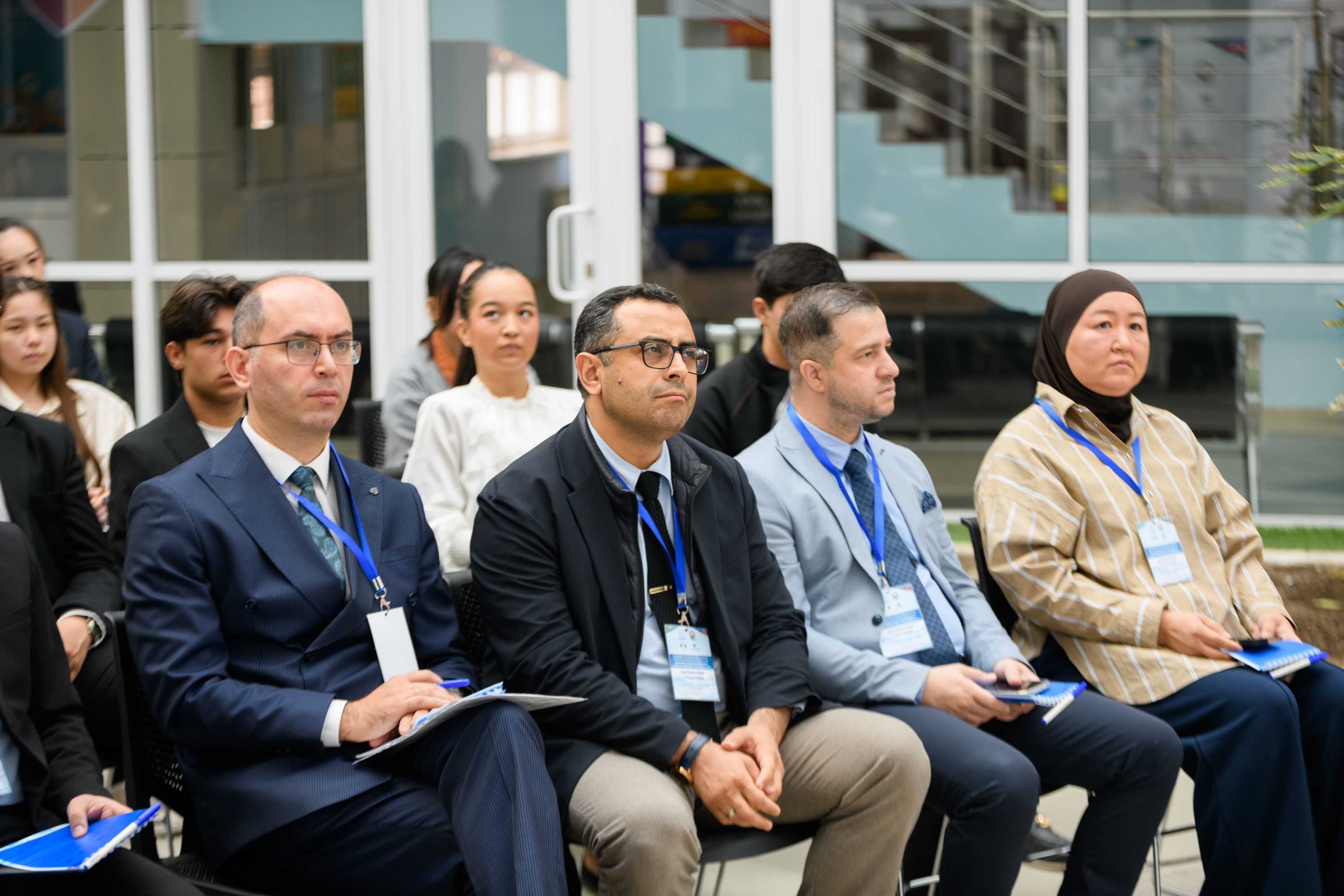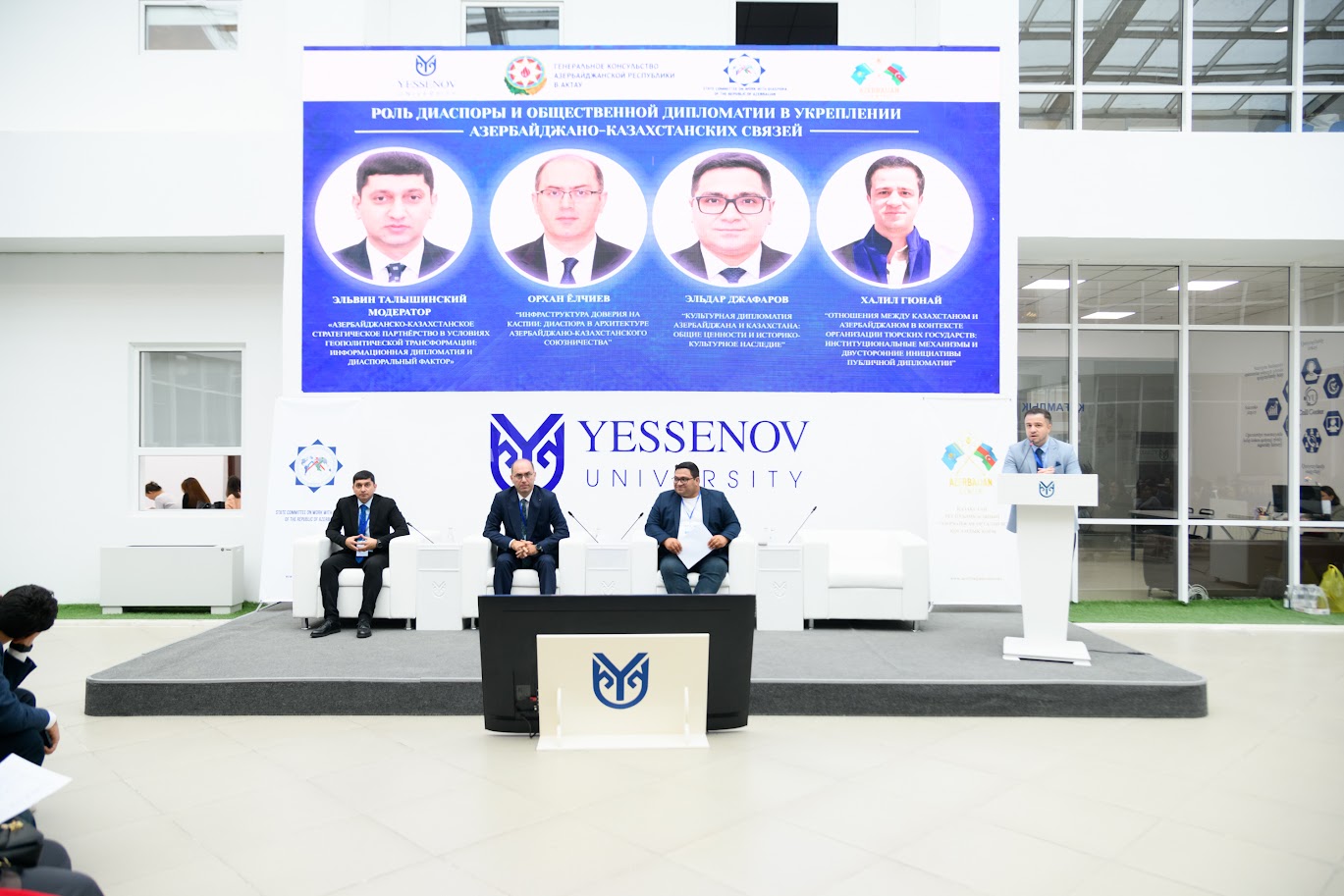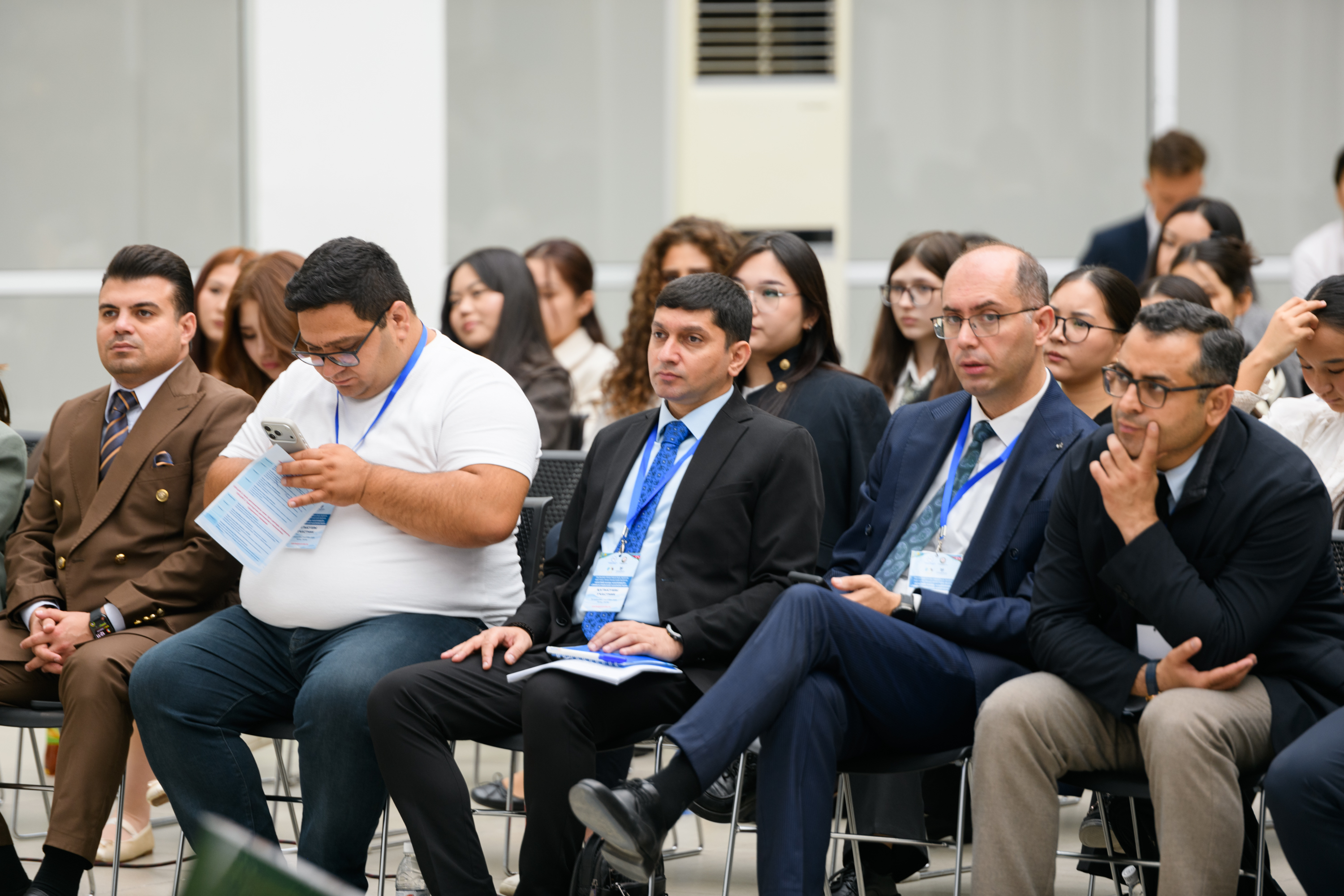
Orkhan Yolchuyev, Director of the CASPIA Analytical Center, took part in the forum “The Caspian Macroregion: The Architecture of Political and Economic Partnership between Azerbaijan and Kazakhstan,” organized in Kazakhstan by Yessenov University and the Azerbaijan Center Public Foundation.
As part of one of the panel sessions, Yolchuyev spoke about the development of the Middle Corridor and its role in shaping Eurasia’s transport architecture. According to him, the discussion should begin with a fundamental question: are the participating countries simply creating another route for moving cargo, or are they building a space in which Kazakhstan, Azerbaijan and their partners can make joint decisions and take responsibility for the outcome?
“For cargo owners, it is not enough to know that a route exists on the map. They need to know when their cargo will arrive, how much transportation will cost, and who will take responsibility if delays occur along the way. This is where geopolitics meets the practical question of trust,” Yolchuyev said.
He noted that the Middle Corridor already has the key infrastructure in place — railways, ports, shipping capacity and terminals — but its competitiveness depends on how effectively these elements operate as a single system. Even an expansion of capacity will not deliver its full effect if time continues to be lost at transfer points, during document handovers and in the coordination of tariffs.
According to the CASPIA Director, for Kazakhstan and Azerbaijan the Middle Corridor is not only a transport project but also an instrument for expanding economic choice.
“Competition between routes is won not only by geography, but by the quality of joint work. Azerbaijan and Kazakhstan need to offer the market a reliable transport product — with through tariffs, coordinated schedules and clear responsibility for cargo,” he said.
During the forum, Yolchuyev also spoke at a session devoted to the Azerbaijani diaspora in Kazakhstan and the role of public diplomacy.
He noted that ties between Azerbaijan and Kazakhstan have been shaped not only by interstate agreements, but also by people who have lived and worked together for decades. He placed particular emphasis on the history of Mangystau, where Azerbaijani specialists in the oil industry played an important role.
In Yolchuyev’s view, a modern diaspora should not limit itself to preserving the memory of its country of origin, but should also take an active role in Kazakhstan’s social, professional and economic life. Among the practical areas he highlighted were stronger cooperation between universities and analytical centers in Baku and Aktau, student and research exchanges, and closer interaction between the two countries’ business and professional communities.
“As Director of CASPIA, I often speak about corridors. But the most reliable corridor between Azerbaijan and Kazakhstan already exists — it was built by people. We now need to take care of it just as seriously as we take care of ports, roads and terminals,” Yolchuyev concluded.