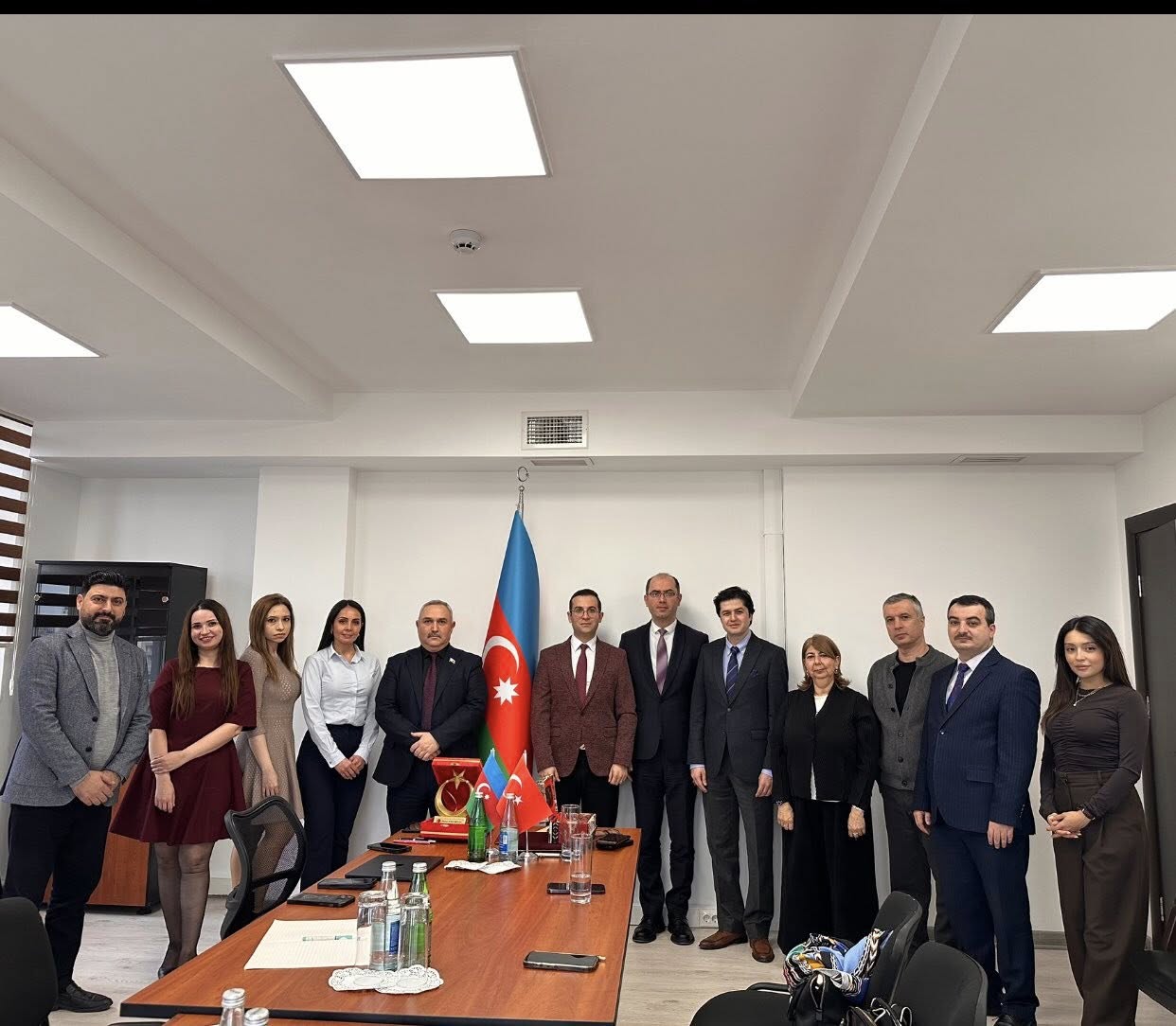
Following a comprehensive rebranding, the former STEM Lab center has evolved into CASPIA, adopting a new name, a broader mission and a more ambitious operational format. The center held its first major public event in its refreshed Baku office, precisely, an expert roundtable titled “Azerbaijan–Turkey: Strategic Perspectives in a Changing Regional Order.”
The session brought together leading analysts from Azerbaijan and Turkey. Representing the Turkish side was Mehmet Gökhan, senior analyst at Ankara’s Center for Diplomacy and Strategic Studies (DASAM). The discussion ran for roughly two hours and was marked by a brisk, high-energy exchange of ideas.
Participants carried out an in-depth review of the present state and forward-looking dimensions of Azerbaijani-Turkish strategic partnership against the backdrop of rapidly shifting geopolitics across the South Caucasus, the Caspian basin, Central Asia, and the Black Sea region.
Considerable focus was placed on the remarkable depth of political alignment – frequent high-level engagement, closely coordinated positions in multilateral forums, and robust institutional mechanisms. It was widely acknowledged that the bilateral relationship has attained an exceptional level of intensity and responsiveness.
In the energy domain, speakers explored opportunities to scale up transit infrastructure and advance collaborative projects in renewables and clean technologies. The conversation underscored that energy ties have long since moved beyond commercial considerations to become a cornerstone of both regional stability and broader continental energy security.
A significant share of the time was devoted to transport and connectivity initiatives. The panel closely examined how the Middle Corridor and the Zangezur Corridor complement each other, reshaping global trade flows and cementing Azerbaijan and Turkey’s roles as indispensable Eurasian transit nodes.
The ongoing Turkey–Armenia normalization process received dedicated attention. There was broad agreement that meaningful and lasting progress hinges on full consideration of Azerbaijan’s interests and concerns. At the same time, unlocking all regional transport links continues to be regarded as a high-priority objective that would dramatically improve stability and economic integration throughout the South Caucasus.
The discussion also touched on the distinctive contours of Turkey’s broader regional posture.
Taking a wider lens, participants assessed the ripple effects of the Azerbaijan–Turkey axis on dynamics in Central Asia and the Middle East, as well as the growing necessity of crafting a coherent joint strategic narrative and stepping up coordinated public diplomacy and media engagement.
Throughout, the atmosphere remained open, constructive, and notably lively. Panelists asked pointed questions and offered practical suggestions for deepening collaboration across research, analysis, and strategic communications.
CASPIA signaled its clear intention to make such high-level expert gatherings a regular fixture, establishing itself as a go-to platform for serious, evidence-based dialogue on the most pressing regional and international issues.