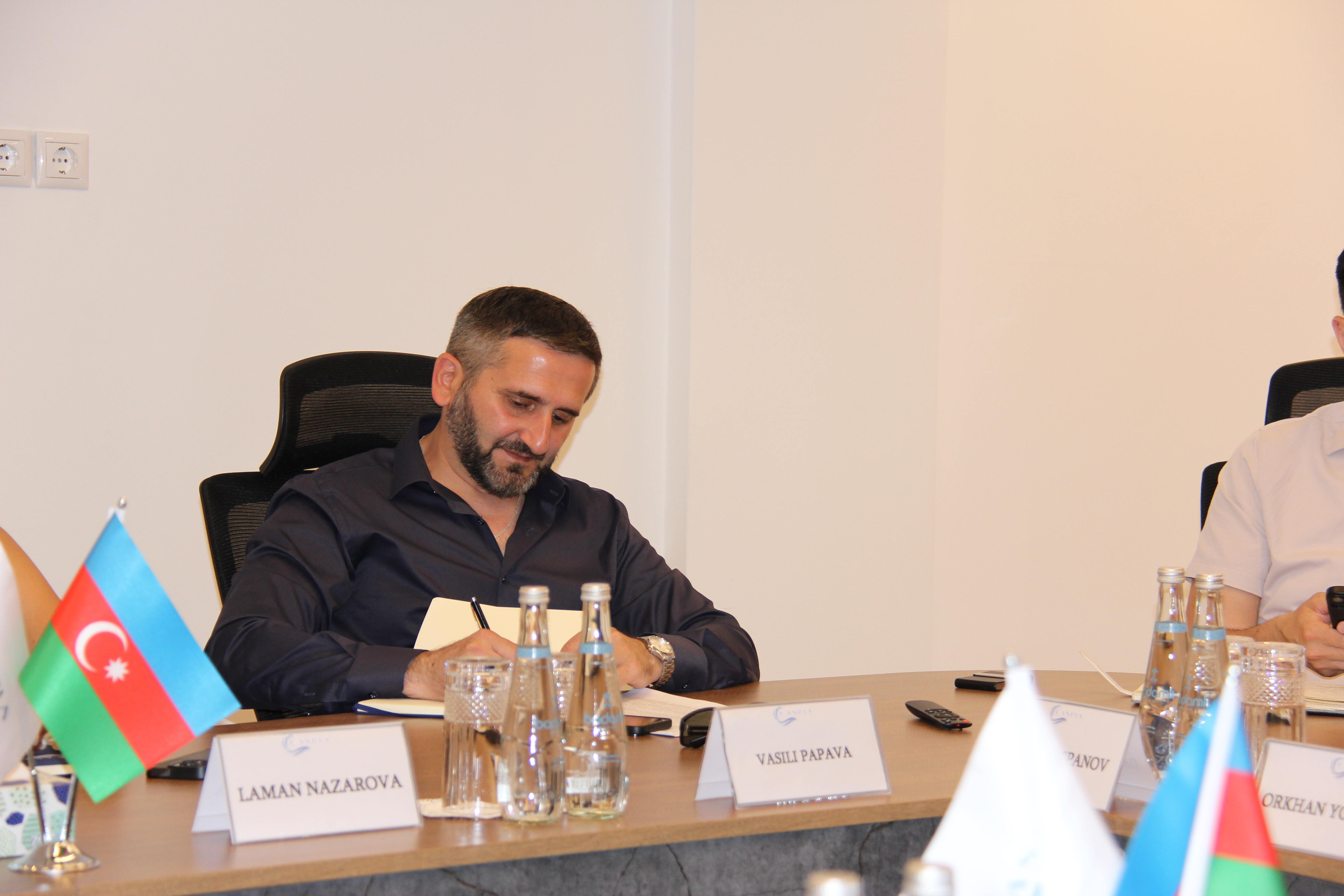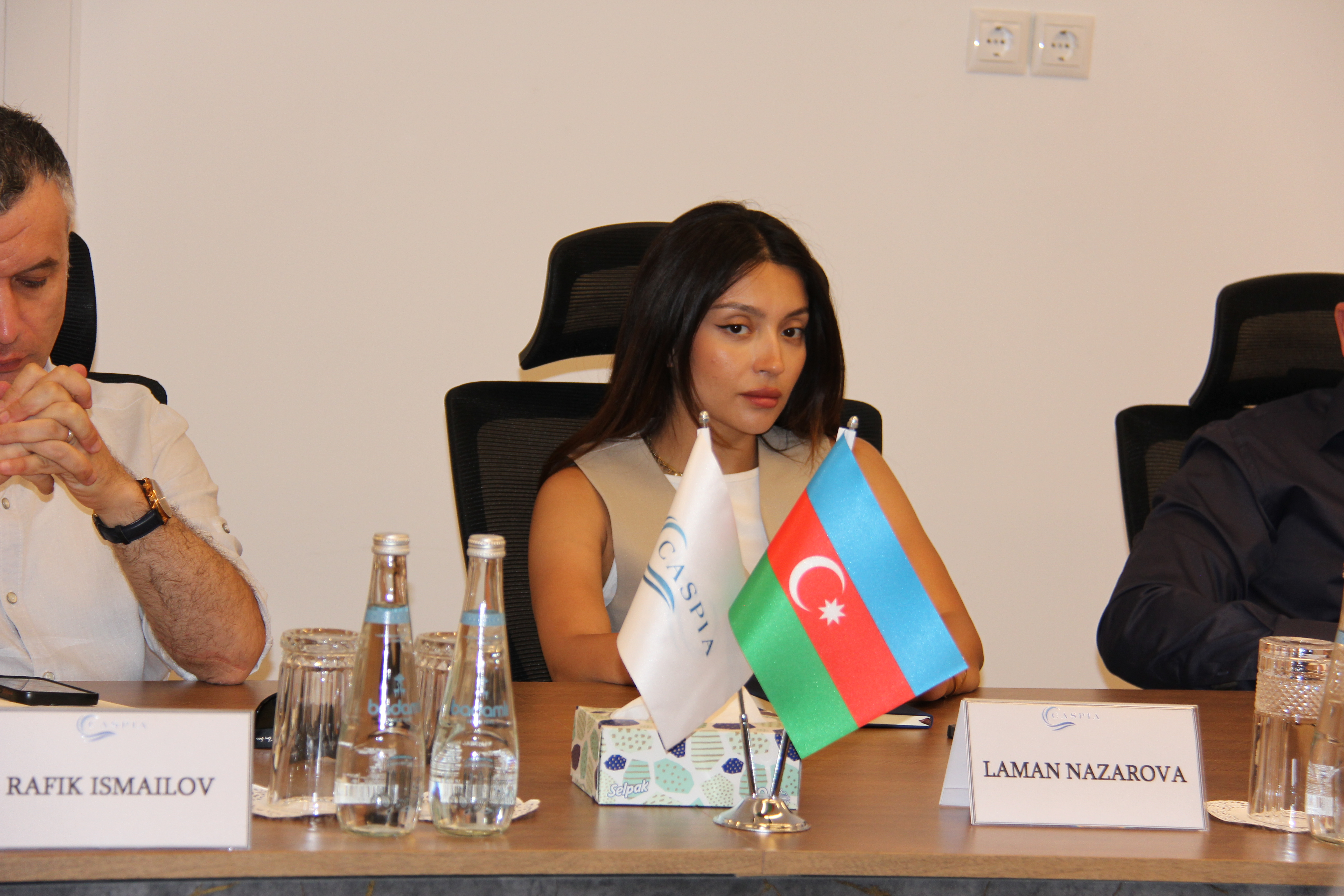
CASPIA Analytical Center hosted a closed expert roundtable entitled "The Future of International Transport Corridors in the Contemporary World." The event brought together international experts, representatives of the analytical community, and industry professionals to discuss the evolving role of international transport and logistics corridors amid a rapidly changing geopolitical and geoeconomic landscape.
The discussion focused on the transformation of Eurasia's transport architecture, the growing importance of multimodal connectivity, the impact of geopolitical crises on global supply chains, and the future development of key transport corridors linking Europe and Asia.
One of the keynote speakers was Vasili Papava, a Georgian political analyst and expert in geopolitics, who examined the strategic role of Iran within regional transport networks. His presentation focused on the impact of regional instability—particularly during the period of military confrontation involving the United States and Iran—on Iran's transport and logistics sector. He highlighted how geopolitical tensions influence the reliability of transit routes, regional infrastructure projects, and the broader dynamics of connectivity across the Middle East and Eurasia.
The roundtable also featured a presentation by Visiting Lecturer at the Moscow State Institute of International Relations (MGIMO). Expert analyzed the current trends and challenges facing the International North–South Transport Corridor (INSTC), outlining key infrastructure, regulatory, and coordination issues affecting the route. She emphasized Azerbaijan's strategic position within the corridor, noting its growing importance as a critical transit hub connecting the Caspian region, the South Caucasus, and international markets.
Representing Kazakhstan, Dastan Ospanov, Chief Commercial Officer (CCO) of TransConsulting LLP, addressed the prospects of the Trans-Caspian International Transport Route (Middle Corridor). He noted that increasing geopolitical uncertainty affecting both northern and southern transport routes has significantly enhanced the attractiveness of the Middle Corridor as a reliable and resilient alternative connecting Europe and Asia. According to Ospanov, sustaining this momentum will require continued investment in transport infrastructure, digitalization of logistics processes, greater operational coordination among participating countries, and further improvements in transit efficiency.
Throughout the discussion, participants agreed that international transport corridors have evolved beyond their traditional logistical function and now represent an essential component of Eurasia's emerging geoeconomic and geopolitical architecture. In an era of supply chain diversification and increasing geopolitical uncertainty, resilient, efficient, and well-coordinated transport routes are becoming indispensable for regional integration and global trade.
Concluding the roundtable, participants emphasized that the long-term success of Eurasian transport corridors will depend on stronger regional cooperation, coordinated infrastructure development, harmonization of customs procedures, and continuous dialogue between policymakers, businesses, and the expert community. The event reaffirmed the importance of expert engagement in shaping informed policy recommendations and advancing sustainable connectivity across Eurasia.