Over the past two years, relations between Georgia and its Western partners have undergone significant changes. Until recently, Tbilisi was regarded as one of the European Union’s and NATO’s key allies in the South Caucasus. Today, however, the process of European integration has effectively been suspended, political dialogue is experiencing a deep crisis, and the actions of both sides are accompanied by mutual criticism and demonstrative political signals. At the same time, these developments extend far beyond bilateral relations, affecting the security architecture of the South Caucasus, the regional balance of power, and the interests of Azerbaijan, Armenia, Türkiye, Russia, China, and the European Union.
The key question today is whether the current cooling of relations represents a temporary political crisis or signals a long-term transformation of Georgia’s role in the West’s regional strategy.
The most likely scenario through the end of 2026 appears to be the preservation of a model of “cold partnership”: the EU and NATO will continue to support cooperation in the areas of security, energy, and transport connectivity while maintaining political pressure on the authorities in Tbilisi. For their part, the Georgian authorities are likely to continue pursuing a policy of diversifying their foreign relations by intensifying cooperation with China, the countries of Central Asia, and the Middle East. However, given the strategic importance of the South Caucasus and Georgia’s role in the development of the Middle Corridor, a complete rupture between Tbilisi and the West remains unlikely in the foreseeable future. Most likely, the two sides will seek opportunities for the gradual restoration of dialogue, as further confrontation poses risks not only to Georgia itself but also to the entire regional security system.
According to Victor Kipiani, founder of the new political party “Georgia First”, Head of the analytical organization Geocase, and a prominent Georgian lawyer, relations between Georgia and its Western partners have entered one of their most difficult periods in recent years. The expert believes that it is the actions of the European Union that most clearly demonstrate the change in the West’s attitude toward the authorities in Tbilisi. In his view, the process of European integration has effectively been suspended, while political dialogue between the Georgian government and Brussels is becoming increasingly confrontational.
Kipiani notes that the current state of relations can no longer easily be described as an ordinary political crisis. In his assessment, the rhetoric exchanged between the Georgian leadership and European institutions increasingly resembles a state of “cold war,” in which the parties maintain formal contacts while the level of political trust remains extremely low. Under these circumstances, the expert believes that positive changes are unlikely in the near future.
At the same time, Kipiani points out that the situation surrounding NATO should be viewed somewhat differently. According to him, the Alliance itself is currently undergoing significant transformations, primarily related to the war in Ukraine and the future architecture of European security. For this reason, the expert believes that it is premature to discuss the prospects for further eastward enlargement of NATO. Despite the continuation of existing cooperation programs with Georgia, no concrete political decisions regarding the country’s further progress toward membership have yet been observed.
According to the analyst, Georgia’s relations with the European Union and NATO should be viewed as a single political process reflecting the broader crisis of trust between the ruling Georgian Dream party and the Western political establishment. It is this crisis, he believes, that defines the current dynamics of relations with both Brussels and the Alliance.
At the same time, the expert emphasizes that Brussels is deliberately refraining from reconsidering the visa-free regime for Georgian citizens. In his view, the European Union seeks to preserve direct human, educational, professional, and societal ties with Georgian society, separating its attitude toward the current authorities from its attitude toward the country’s population. This is why, Kipiani believes, the EU’s current policy is aimed not at severing ties with Georgia but at preserving a kind of “bridge of trust” with Georgian society.
Discussing Georgia’s place in the West’s regional policy, the expert believes that the country no longer possesses the exceptional status of a strategic partner that it enjoyed several years ago. In his view, the European Union’s attention is gradually shifting toward Armenia, which has demonstrated a more consistent interest in closer cooperation with European institutions. At the same time, Kipiani stresses that this does not mean Georgia has lost its importance as a regional transit state. Rather, it reflects a transformation of the entire political architecture of the South Caucasus, in which Georgia is no longer the West’s sole indispensable partner.
The expert points out that the ongoing peace process between Azerbaijan and Armenia is becoming a key factor in the region’s transformation. According to him, these developments are objectively changing the regional balance, as a result of which Georgia’s previously exceptional role is gradually giving way to a more complex system of regional interaction. At the same time, the country’s geographical location and its importance as a major transit route continue to retain strategic value.
According to Victor Kipiani, the deterioration of relations between Georgia and the West is also having a direct impact on the security system of the South Caucasus. He believes that the weakening of the Western presence in Georgia objectively contributes to the strengthening of Russian influence, both in the country’s domestic politics and across the region as a whole. At a time when the European Union’s cooperation with Azerbaijan and Armenia is developing quite actively, Russia’s role within Georgia, by contrast, is gradually increasing, which must be taken into account by all South Caucasus states.
At the same time, the analyst is convinced that a revision of the European Union’s policy toward Georgia remains entirely possible. However, according to him, such a scenario can occur only if the authorities in Tbilisi return to a consistent European course, implement democratic reforms, and bring national legislation into line with European standards. The expert recalls that European integration has always represented not merely a foreign policy choice for Georgia but also a component of its civilizational identity.
Kipiani pays particular attention to the consequences of the current situation for Azerbaijan and the Middle Corridor project. He believes that a further strengthening of Russian influence in Georgia could create additional risks for the functioning of this strategic route. At the same time, the expert emphasizes that the Middle Corridor project itself is of such high international importance that its implementation serves the interests of all countries in the region, including Georgia. In his view, the key question remains the extent of possible Russian influence on the development of transport initiatives in the South Caucasus. Forecasting the further development of relations between Georgia and the West through the end of 2026, Victor Kipiani considers the continuation of the current confrontational model of interaction to be the most likely scenario.
.jpeg)
According to Georgian political analyst Omar Ardashelia, signals coming from the European Union and NATO indicate a deterioration in political dialogue with the authorities in Tbilisi, largely as a result of both the domestic and foreign policies pursued by Georgia’s current leadership.
Ardashelia believes that Georgia’s Euro-Atlantic integration process has effectively entered a state of suspension. In his view, the resumption of a full-fledged dialogue on European and Euro-Atlantic integration will depend to a significant extent on the country’s further domestic political development, including the outcome of the upcoming parliamentary elections.
The expert points out that Western partners are already employing various mechanisms of political and financial pressure on the Georgian authorities. At the same time, in his assessment, the measures currently being applied have not yet reached a critical level, although further developments will depend on the political decisions of both sides.
According to Ardashelia, the EU and NATO no longer view the authorities in Tbilisi as the same reliable strategic partner they once considered them to be. He believes that part of the West’s attention in the region is gradually shifting toward Armenia, which has intensified its cooperation with European and Euro-Atlantic institutions in recent years.
Analyzing the consequences of the current crisis, the expert notes that the deterioration of relations between Georgia and Western countries is unprecedented in nature. As one of the clearest indicators, he points to the diplomatic developments of recent months, including Georgia’s absence from invitations to certain events held within the framework of NATO summits, which, in his view, reflects the current level of political disagreement.
Ardashelia believes that the current situation is also affecting the security architecture of the South Caucasus. He notes that certain areas of security cooperation between Georgia, the United States, and NATO are now developing less actively than before. At the same time, the expert is convinced that, in the long term, the West will remain interested in cooperating with Georgia on regional security issues, given the country’s strategic geographical location.
According to the analyst, against the backdrop of cooling relations with the West, Tbilisi is intensifying its search for alternative foreign policy and economic directions. In particular, Georgia is expanding cooperation with the countries of Central Asia, especially Kazakhstan and Uzbekistan, while also deepening its ties with China. At the same time, Ardashelia believes that these developments will not have a significant impact on the implementation of Azerbaijan’s strategic projects, including the development of the Middle Corridor. On the contrary, the expert emphasizes that this route will continue to develop due to the strong interest of the countries of the region, China, and the Central Asian states, as well as the continued interest of European partners.
Discussing the prospects for Georgian-Western relations, Ardashelia predicts the continuation of a model of “cold pragmatism.” In his view, the ruling Georgian Dream party is unlikely to revise key legislative decisions that have drawn criticism from Western countries in the near future, while continuing to pursue a more independent foreign and domestic policy. According to him, the most sensitive scenario for Georgia could be the possible suspension of the visa-free regime with the EU, which could have a negative impact on both the country’s economy and its social sphere.
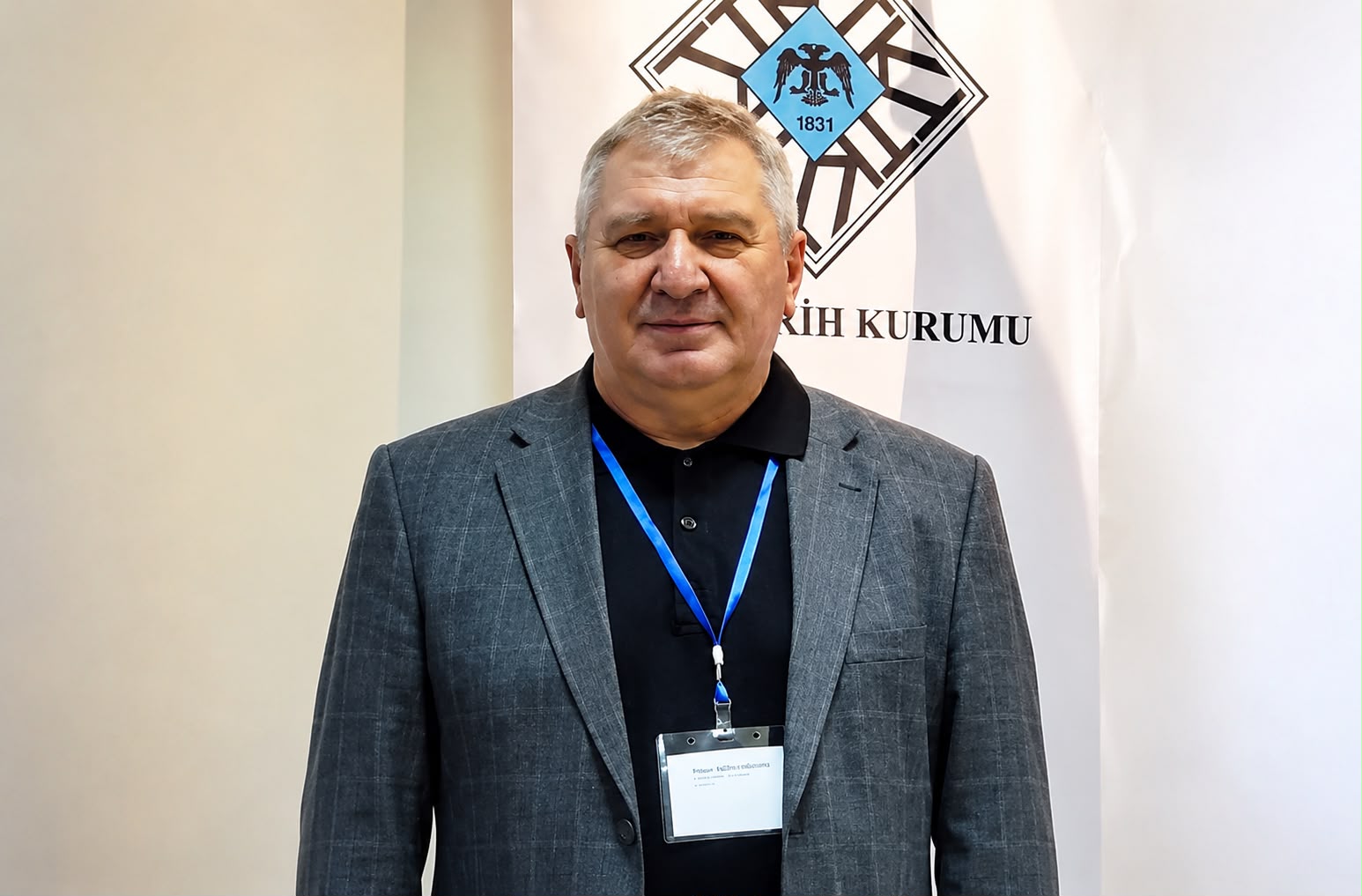
Nikoloz Khatiashvili, a leading Georgian expert and senior research fellow at the Geocase analytical center, believes that the absence of any positive signals from the European Union and NATO indicates a growing crisis of trust between the authorities in Tbilisi and Western capitals. Among the most telling examples, the expert cites Georgia’s absence from the NATO summit, resolutions adopted by the European Parliament, and the effective freezing of the country’s EU accession process. As an additional indicator of the current state of relations, he points to the reduction in high-level political contacts and the absence of visits by EU leaders to Georgia during their most recent trips to the South Caucasus.
At the same time, the expert notes that NATO continues to maintain practical military and technical cooperation with Georgia, consistently supports its sovereignty and territorial integrity, and officially reaffirms its commitment to the decision of the Bucharest Summit regarding the country’s future membership in the Alliance. However, according to the interviewee, the decline in political attention toward Georgia and its effective disappearance from the list of priority issues on the Western agenda demonstrate growing concern about the state of democracy in the country. At the same time, the expert emphasizes that Western states are increasingly distinguishing between Georgian society and the current government while continuing to express support for the Georgian people.
Assessing the West’s current instruments of influence, the Geocase representative notes that their nature has generally remained unchanged, although political pressure has become noticeably more intense. According to him, increased criticism from European institutions, the adoption of new resolutions and negative reports, as well as the suspension of visa-free travel for certain categories of Georgian officials, are primarily political signals aimed at changing the current course of the Georgian authorities.
According to the expert, the European Union and NATO continue to view Georgia as an important regional partner, particularly from the perspectives of Black Sea security, the development of the Middle Corridor, energy cooperation, and the maintenance of stability in the South Caucasus.
The expert believes that the slowdown in Georgia’s European and Euro-Atlantic integration is having a direct impact on the entire regional security system. According to him, Georgia has traditionally served as the West’s key partner in the South Caucasus, performing an important transit function for both Armenia and Azerbaijan. In the analyst’s view, the weakening of the Western presence could create additional opportunities for Russia, Iran, and other external actors to expand their influence. Moreover, reduced Western engagement in security issues could lead to increased pressure on Georgia, heightened threats concerning its occupied territories, and a gradual decline in its role as the region’s most important transit and military-political hub.
Discussing the impact of the current crisis on Azerbaijan’s regional interests, the expert notes that the deterioration of relations between Tbilisi and the West is inevitably affecting the prospects for the development of the Middle Corridor, as its South Caucasus segment relies heavily on close cooperation between Azerbaijan and Georgia. In his view, declining confidence among Western investors could increase investment, legal, and security-related risks for the implementation of major infrastructure projects. At the same time, he does not rule out that, should the current political situation persist, alternative transport initiatives, including the TRIPP project, may become increasingly relevant, while Baku’s interest in developing new routes through Armenia may also grow.
Assessing the future development of relations between Georgia and its Western partners, the expert believes that the possibility of restoring full-fledged cooperation remains. However, in his view, the initiative now rests entirely with the authorities in Tbilisi. To resume the integration process, he notes, the Georgian authorities must return to the consistent implementation of democratic reforms, abandon repressive legislation, ensure the rule of law, create a fair political environment, and move away from anti-Western rhetoric. With regard to NATO, the most important conditions remain the continuation of security-sector reforms, the strengthening of democratic oversight of defense institutions, and the restoration of trust in relations with allies.
In conclusion, the expert predicts that the most likely scenario through the end of 2026 will be the continuation of difficult but pragmatic relations between Georgia and the West. At the same time, he does not rule out the possibility that the Georgian authorities may take certain steps as early as this autumn to reduce tensions, including possible adjustments to specific legislative provisions or personnel changes within the executive branch. However, according to the analyst, further developments will depend both on domestic political dynamics in Georgia and on the broader geopolitical situation in the South Caucasus, as well as on the position of Western partners.
.jpeg)
As one of the clearest examples of the deterioration of Georgia’s relations with its Western partners, Georgian political scientist and diplomat George Mchedlishvili cites Georgia’s absence from the invitation list for the NATO summit in Ankara, which, in his view, became clear evidence that the authorities in Tbilisi no longer occupy their former position among the West’s priority partners.
Mchedlishvili considers developments within the OSCE Parliamentary Assembly to be further confirmation of the change in attitudes toward Georgia. There, the Georgian delegation left the session in protest against the position of U.S. Congressman Joe Wilson. In the expert’s view, such episodes reflect the overall negative trajectory of relations between Georgia and Western institutions. He also draws parallels between Western policy toward Georgia and Azerbaijan, noting that, in his opinion, manifestations of double standards can be observed in both cases.
The expert believes that the current crisis in relations between Tbilisi and its Western partners began in 2022, following the start of Russia’s full-scale war against Ukraine. According to him, the Georgian leadership’s refusal to join anti-Russian sanctions, as well as its decision not to provide state-operated flights for the transportation of Georgian volunteers to Ukraine, provoked an extremely negative reaction from the Ukrainian leadership, the European Union, and the administration of U.S. President Joe Biden. It was then, Mchedlishvili believes, that Western partners’ trust in the current Georgian authorities began to decline rapidly.
Assessing the West’s current instruments of influence, the political scientist notes that they are no longer limited solely to political signals. In addition to Georgia’s absence from invitations to major international events, the expert points to the country’s demonstrative exclusion from a number of diplomatic contacts, as well as the fact that recent visits by senior Western representatives, including EU leaders and American politicians, included Baku and Yerevan but not Tbilisi. Furthermore, according to Mchedlishvili, Western diplomats have become considerably more active in engaging with representatives of the Georgian opposition and publicly expressing support for protest actions, which should also be regarded as one of the instruments of political pressure.
At the same time, the expert proposes distinguishing between the approaches of the European Union and NATO toward Georgia. In his view, Brussels currently takes a considerably tougher position toward the authorities in Tbilisi, while a more restrained and wait-and-see approach remains within the North Atlantic Alliance. Mchedlishvili believes that the United States continues to play a key role in shaping NATO’s position and that the current U.S. administration has not yet demonstrated an approach as confrontational as that of European institutions.
The expert pays particular attention to the impact of the current situation on the development of the Middle Corridor and Azerbaijan’s interests. According to him, the continued successful development of this strategic route depends directly on the preservation of cooperation among the states of the South Caucasus, as well as on the interest of the Central Asian countries and Western partners. In this regard, Mchedlishvili positively assesses the current dynamics of the Armenian-Azerbaijani dialogue, noting that the conclusion of a peace agreement could create fundamentally new conditions for regional integration.
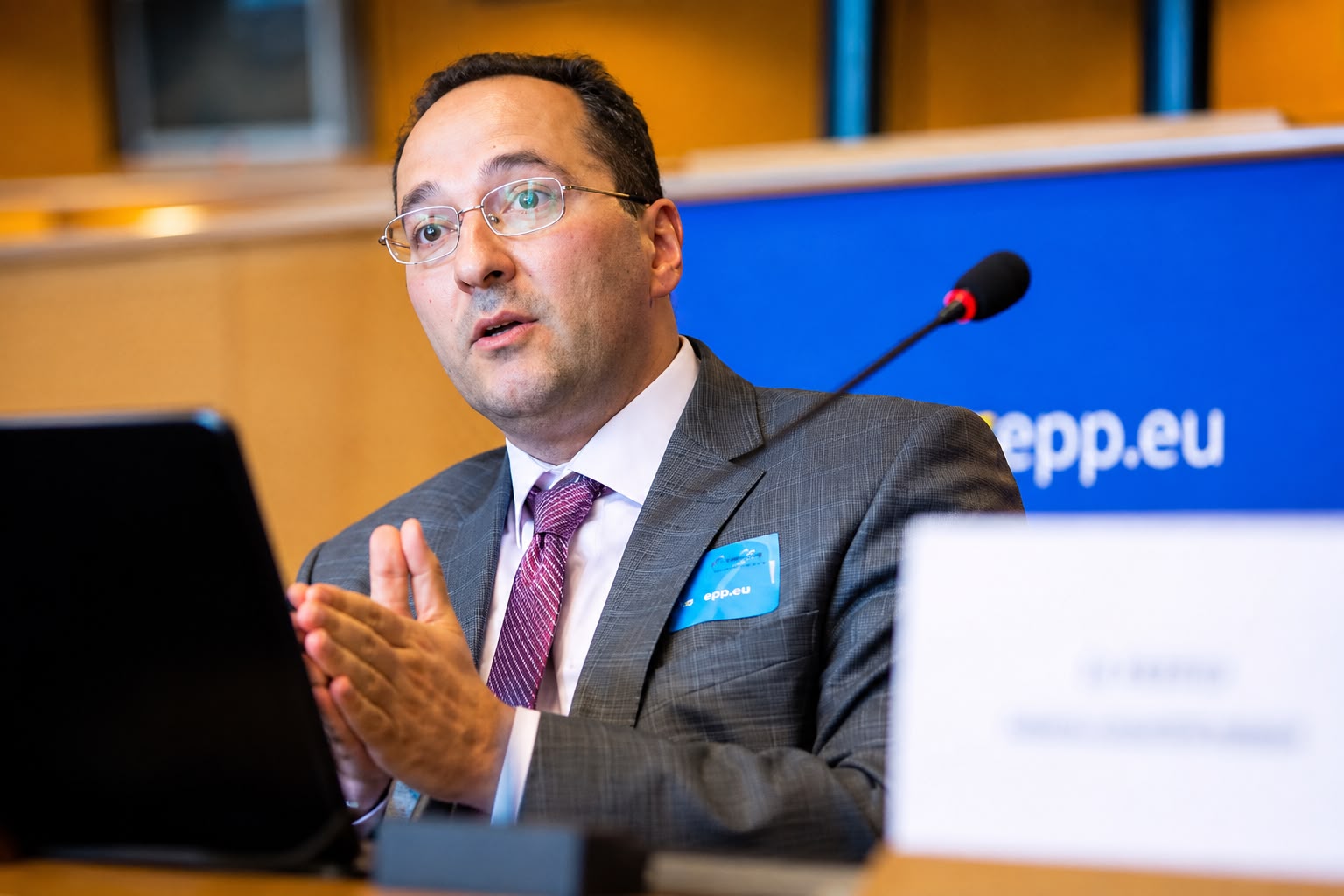
According to Georgian political analyst and international relations expert David Kartvelishvili, the signals coming from the European Union and NATO in recent months indicate not so much a fundamental revision of Western policy toward Georgia as a profound internal crisis within Western institutions themselves.
The expert believes that the modern West has, to a considerable extent, become hostage to European bureaucracy, which, in his assessment, is gradually moving away from the original principles of European integration. In this context, relations with Georgia are increasingly viewed not through the prism of long-term strategic partnership but in the context of political and ideological disagreements.
With regard to NATO, Kartvelishvili believes that the Alliance is currently focused primarily on its own internal challenges. In his view, issues related to the bloc’s further enlargement and the integration of new states, including Georgia, have moved to the background. Against this backdrop, the official position of Tbilisi, as the analyst notes, is based on the principle of a strategic pause. In his assessment, the Georgian authorities prefer not to accelerate the process of Euro-Atlantic integration and are waiting for possible changes within the European Union and NATO.
Discussing Georgia’s role in the West’s strategy in the South Caucasus, Kartvelishvili draws attention to the developments that followed the NATO summit in Bucharest in April 2008. In his view, in the years that followed, Georgia and Ukraine were largely assigned the role of states capable of containing Russia and serving as potential arenas for geopolitical confrontation between Moscow and the West. At the same time, the current Georgian authorities, the expert believes, have refused to view the country as an instrument for opening a “second anti-Russian front.” In his assessment, this became one of the key factors behind the deterioration of relations between Tbilisi and part of the Western political establishment.
Kartvelishvili separately criticizes the policies of European institutions toward Georgia’s domestic political situation. He argues that over the past six years, substantial political and financial support has been directed toward various domestic forces advocating a change in the current course pursued by the Georgian authorities. In his assessment, several attempts to destabilize the political situation were prevented during this period. In this regard, the expert questions whether the previous nature of the strategic partnership between Georgia and Western institutions has been preserved. In his view, support for political forces oriented toward a change of government is difficult to reconcile with the principles of equal cooperation and respect for state sovereignty.
Amid tensions in relations with some Western partners, Georgia, according to the expert, will continue to diversify its international ties. He notes the strengthening of cooperation with China, the Arab world, the states of Central Asia, and the countries of the South Caucasus. At the same time, Kartvelishvili emphasizes that this does not necessarily mean abandoning the European direction. Rather, in his view, Tbilisi is seeking to avoid dependence on a single foreign policy center and to expand its room for independent maneuver.
Discussing the prospects for relations between Georgia and the West through the end of 2026, David Kartvelishvili does not expect significant changes. The possibility of more substantial developments will depend primarily on transformations within the domestic policies of the European Union and NATO, as well as on Georgia’s ability to preserve the independence of its foreign policy course.
.jpeg)